


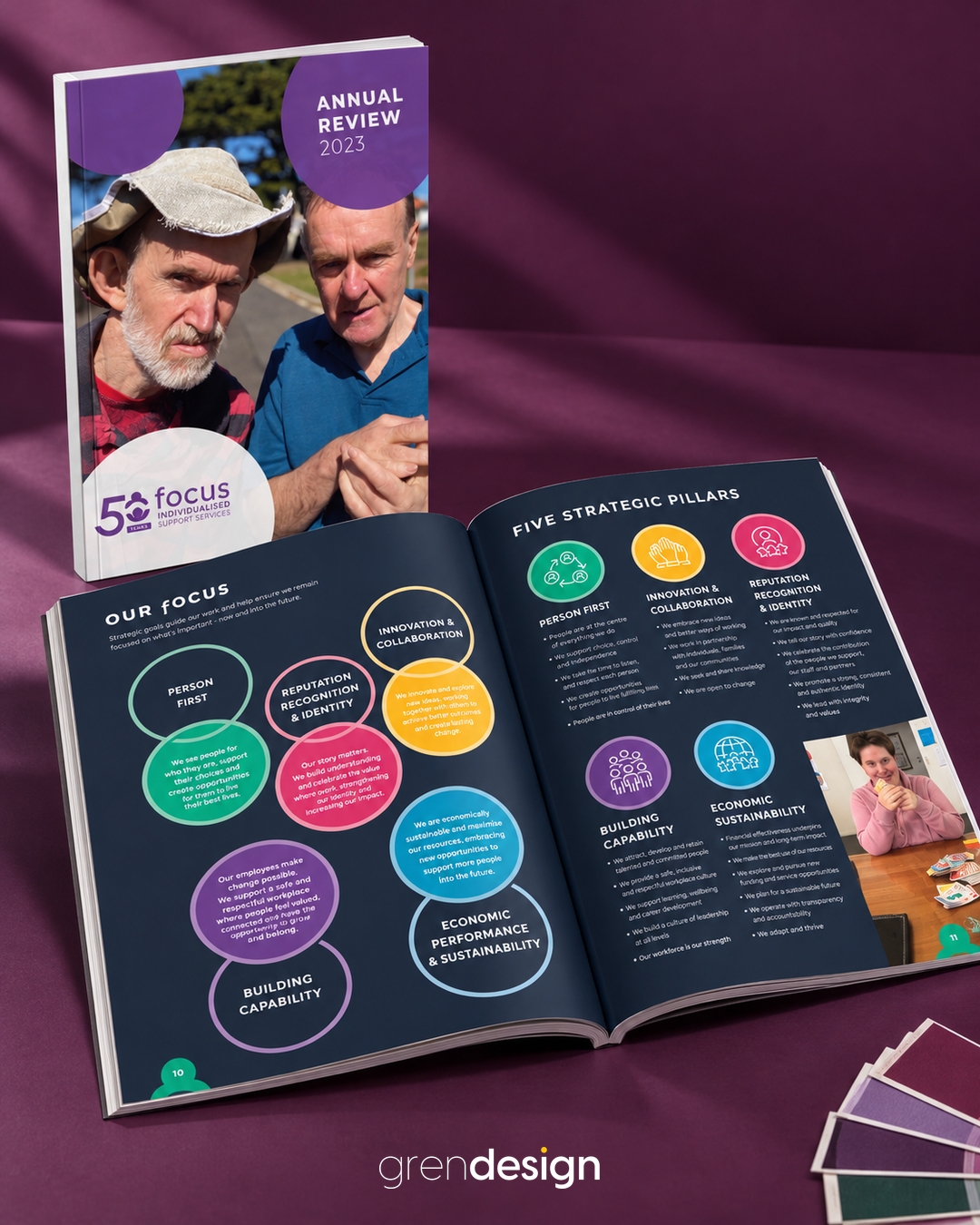
Annual report design that makes your work easier to understand
Design guides · Annual reports
Your annual report should help people understand what your organisation did, what changed and where it’s heading. The design brief is where you decide how readers will find that information.
Who is the report for? What do they need to know? Will they read it online, download it or receive a printed copy? These answers shape the structure, layouts and production requirements.
Put the advice into practice
Make your expertise look as considered as the work behind it
Bring brand, sales material and digital design into one coherent presentation.
Discuss your design briefIf annual report design is part of your end-of-year planning, the following steps will help you prepare a useful brief and a realistic schedule.
Start with your readers
A board member may need to find governance information quickly. A funder may want to understand how resources were used. A community member may be looking for progress on an issue that matters to them.
Identify your main audiences and the questions your report needs to answer. Then decide which messages need prominence and which details provide supporting evidence.
This gives your annual report designers a clear purpose for the work. It also gives your team a shared basis for reviewing the design.
Plan the structure before every page is laid out
Create a contents outline and decide where your key results, financial information, case studies and future priorities belong.
The Australian Government Style Manual recommends a summary for long reports and short, informative section titles. Its report guidance is a useful reference for planning navigation.
Ask your designer to establish a consistent approach to headings, body text, captions and tables. Reviewing a few representative pages early helps you resolve questions about content length and readability before the full layout is developed.
Give the numbers context
A prominent figure needs enough explanation to mean something. What period does it cover? What does it measure? Is there a useful comparison with the previous year or a stated target?
Choose charts that clarify the comparison or trend. Keep labels and units consistent, and check that figures match wherever they appear. Use labels or patterns alongside colour to convey meaning, as the Style Manual’s image guidance recommends.
Financial summaries need care, too. The Department of Finance’s guidance for Commonwealth entities suggests considering a brief summary to help readers understand results, while keeping it separate from the financial statements. Read its presentation guidance.
Put accessibility in the scope
Agree on accessibility requirements, deliverables and testing before production starts.
For a PDF, this includes appropriate document tags and checking that assistive technology reads the content in the right order. The Style Manual’s PDF guidance also recommends providing the content in another accessible format.
Complex charts may need fuller explanations than a short image description can provide. W3C’s guidance on complex images explains how short descriptions and detailed text alternatives work together.
Confirm who will supply descriptions, who will check the exported files and how issues will be resolved. Allow time for those checks.
What affects annual report design cost
A useful quote depends on the work involved. Page count is one part of the picture. A report with complex financial tables, custom charts or extensive image sourcing needs a different scope from one built around approved copy and an established layout.
Be clear about whether you need editing, infographics, multiple formats, accessibility testing or extra review rounds. Ask what the quote includes and how additional work will be handled.
If printed copies are required, discuss quantity, paper, finishing and delivery locations separately. These choices affect the print specification and budget.
Prepare a practical design brief
Before requesting a proposal, gather:
- Your audience and the report’s purpose
- A draft contents list and estimated page count
- Available copy, data, financial tables and photography
- Brand guidelines and required report sections
- Digital, accessibility and print requirements
- Your budget, approval contacts and publication date
You do not need every paragraph approved to start a planning conversation. You do need to be clear about what is ready and what is still being developed.
Work backwards from your release date
Allow for content preparation, design, consolidated feedback, approvals and final file checks. If you need printed copies, include proofing, printing and delivery.
Your reporting cycle and approval process should drive the schedule. An end-of-year campaign does not mean every organisation has the same reporting deadline.
Agree on the final formats early. If you also need selected charts or results adapted for your website, presentations or social posts, include them in the brief so that work can be planned.
Annual report design examples
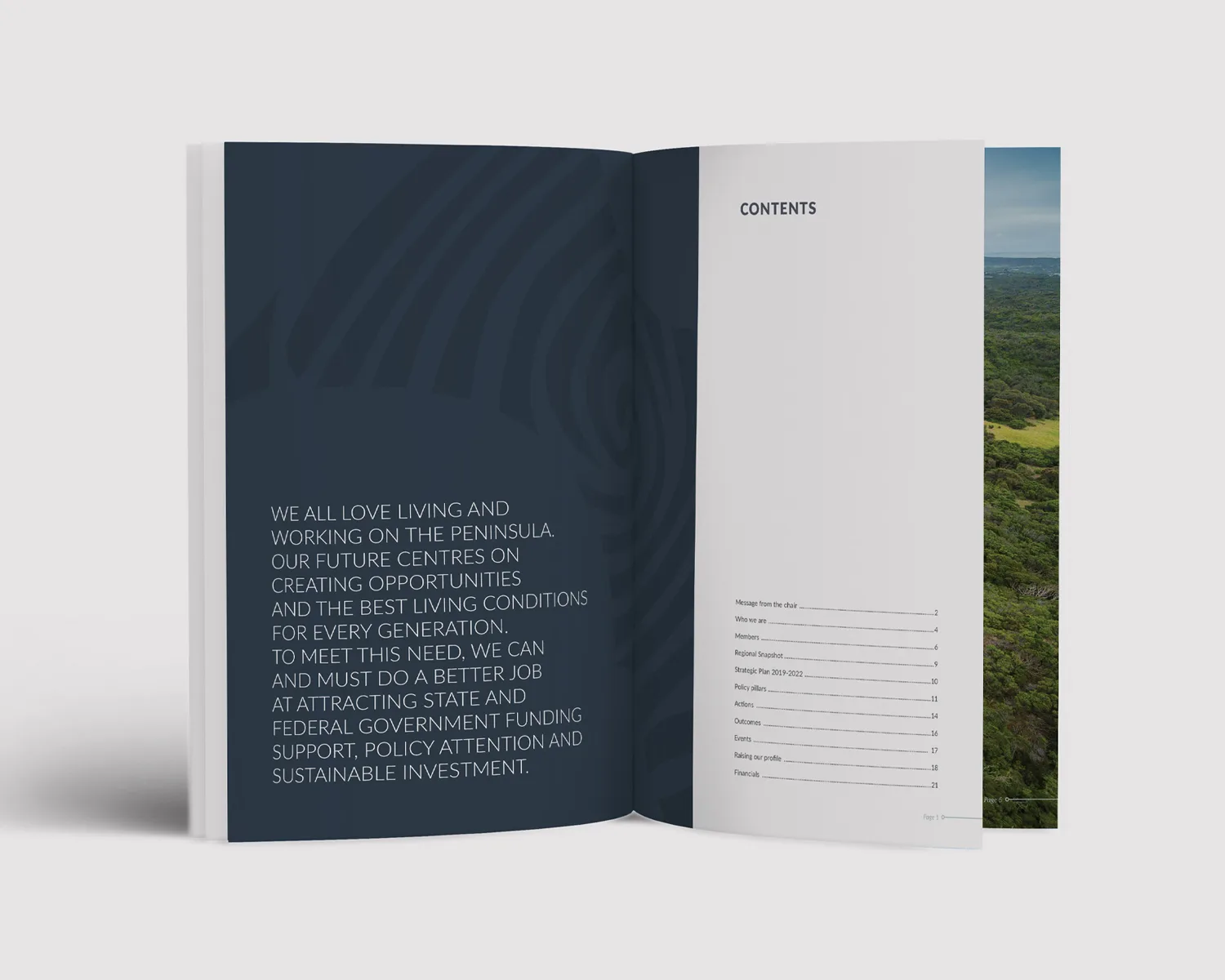
Our Western Port Biosphere annual report work included design, copywriting, layout and visual storytelling. For the Committee for Mornington Peninsula annual report, the scope included content structure, data visualisation and print-ready and digital formats.
These projects show why it helps to define the content and outputs before the full layout begins.
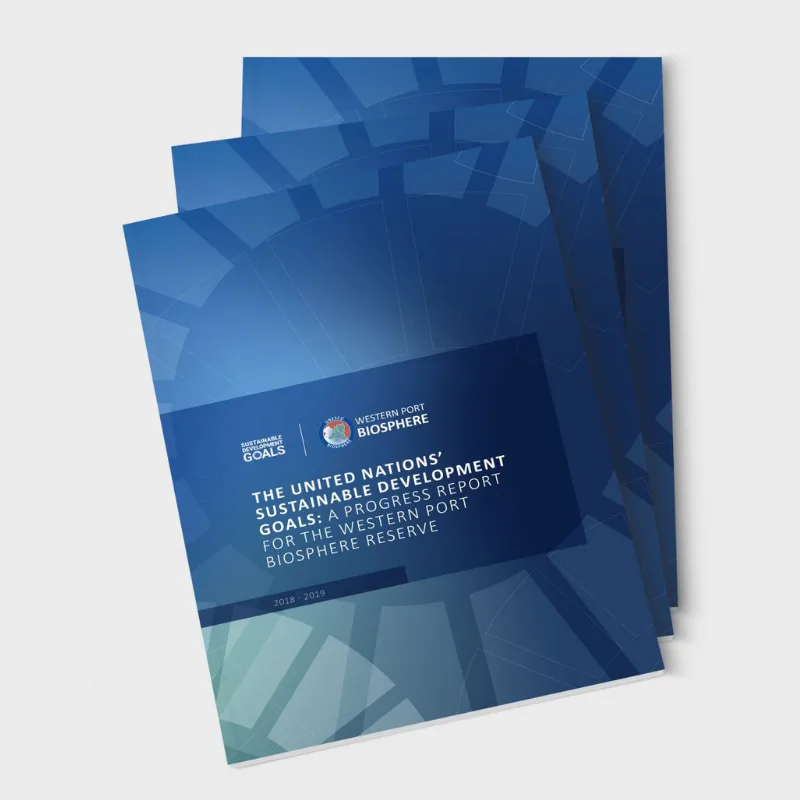
A clear visual direction
The Western Port Biosphere project brought narrative, imagery and layout together in a consistent publication. View the project to see the report’s cover and internal pages.
View the Western Port Biosphere projectAnnual report design FAQs
What does annual report design include?
The scope can include the cover, page grid, typography, contents, charts, tables, image placement and final digital or print-ready files. Editing, custom infographics, accessibility testing and additional formats should be agreed in the brief.
What affects the cost of annual report design?
Page count, content readiness, complex tables, custom charts, image sourcing, review rounds and required formats all affect the scope. Ask for a quote that states what is included and how additional work will be handled. Printing and delivery are quoted separately.
How long does an annual report design project take?
The schedule depends on the report’s length, complexity, content readiness and approval process. Work backwards from your required publication date, allowing for design, consolidated feedback, approvals, final checks and any print production or delivery.
Can I plan the design before the copy is finished?
Yes. An audience, a draft contents list, an estimated page count and a clear picture of what is ready will help start the planning conversation. Agree on content deadlines so that later changes can be managed.
Should an annual report be digital or printed?
Choose the formats your readers need. A digital PDF and a printed report have different production and checking requirements. Discuss navigation, accessibility and any alternative accessible format early, and include printed quantities and delivery needs in the scope.
What should I send Grendesign to get started?
Send your publication date, approximate page count, content status and required formats. Last year’s report, brand guidelines, draft contents, data and photography are also useful starting points.
Your next annual report
Let’s make your year’s work easier to understand.
Last year’s report, a proposed contents list and a publication date are useful starting points for a conversation with Grendesign.
We can help you work through the design scope and develop an annual report that presents your organisation’s work clearly.
We can also coordinate printing and delivery through our partners across Australia. Print costs are quoted separately.
