


Can you see ChatGPT traffic in Google Analytics?
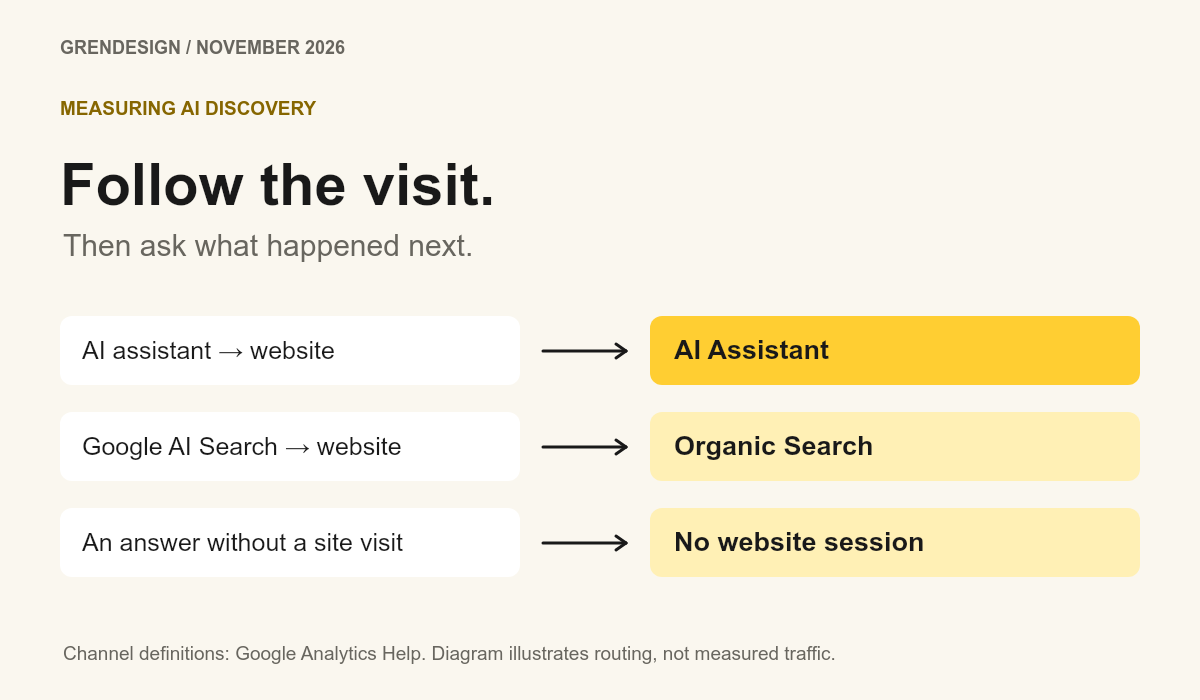
Google Analytics 4 has an AI Assistant channel for visits from recognised AI tools. Open Traffic acquisition, choose Session default channel group and look for AI Assistant. Then check what those visitors do. Google’s AI Overviews and AI Mode belong to Organic Search, so this row does not measure every AI-related discovery.
Put the advice into practice
Turn scattered marketing into a considered plan
Connect strategy, creative, channels and ongoing review around your sales process.
Explore our marketing services
Discuss an ongoing marketing partnershipWhen someone says they found you through ChatGPT, it is tempting to treat that as a new marketing channel to chase. First, find out what your own website can tell you. The useful question is whether those visits help people reach the information, enquiry or purchase they came for.
What changed in Google Analytics?
On 13 May 2026, Google announced dedicated AI Assistant traffic measurement. Recognised assistant referrals can now be classified in the default channel group, rather than requiring a custom grouping just to identify that category.
The change is useful for your November reporting, even if you have not looked for it before. It is not evidence that every business is receiving a wave of AI visitors. Open your own report before deciding whether it deserves more attention.
Where do you find the AI Assistant row in GA4?
Open the correct Google Analytics property and go to Reports → Acquisition → Traffic acquisition. Set a recent date range, such as the last complete month. Choose Session default channel group as the main table dimension, then search the table for AI Assistant.
Google’s Traffic acquisition report instructions explain the report and its session-based dimensions. If it is missing from your navigation, an editor or administrator may need to add it back. You do not need to change your website just to open an existing report.
Which AI visits does the channel include?
Google’s default channel definitions describe AI Assistant as visits from sources such as ChatGPT, Gemini, DeepSeek, Copilot and Grok. The classification depends on Google recognising the referring source.
That means it is a view of measurable visits. It does not count everyone who saw your name in an answer. A person who reads about you without visiting your site creates no website session for that interaction. A missing or unrecognised referrer can also limit what the report tells you.
Where do Google AI Overviews and AI Mode fit?
They are excluded from AI Assistant and included within Organic Search under Google’s current definitions. Keep that distinction beside your report. Otherwise, you may look at one row and incorrectly describe it as your total visibility in AI answers.
A mention, a website visit and an enquiry are different events. Your website analytics can help with visits and measured actions; it cannot, by itself, show every answer in which your business appeared.
How do you tell whether the visits were useful?
Look beyond the session count. Review engagement and the key events that matter to your business, such as a completed enquiry or purchase. Check what those events actually represent. A click that starts a form is different from a successful submission reaching your team.
Compare a consistent period with other channels, and read small totals carefully. One enquiry from a handful of visits is useful information, but it does not establish a dependable conversion pattern. Give the data time to accumulate before changing your marketing around it.
What is a sensible first reporting task?
Save one monthly note with the AI Assistant sessions, measured enquiries or purchases, the date range and any tracking gaps you already know about. If the row is empty, record that and check it next month. Do not turn a missing row into a claim that nobody discovers you through AI.
If you are also experimenting with Gemini’s new business tools, keep those activities separate in your notes. Using AI to make a visual and receiving a visitor from an AI answer are different things to measure.