


Meta ad creative testing when delivery is increasingly automated
As Meta’s ad delivery becomes more automated, a useful creative test still starts with a human decision: what do we want the right customer to understand, and what evidence would tell us the message is working?
Put the advice into practice
Make your advertising work towards the right enquiry
Review the offer, destination, creative and measurement before deciding what to scale.
Discuss your campaign prioritiesA platform update is a reason to review your approach. It is not evidence that every campaign needs rebuilding, nor an explanation for every change in results.
What Meta announced
On 13 October 2026, Meta published an engineering update about its Generative Ads Model, GEM. It describes a central model learning across Meta’s advertising surfaces and objectives. The company also reports aggregate performance improvements.
Those are platform-level claims, not a forecast for your campaign. They do not establish that the update caused a particular account’s increase or decline. The practical framework below is our editorial recommendation for making creative decisions, rather than a set of rules announced by Meta.
Test a customer question, not just a different colour
Useful creative variation changes the idea a person encounters. One ad might explain how a service works. Another might answer a common concern. A third might show relevant evidence. Different background colours on the same message are a much narrower test.
Start by listening to the people who handle enquiries. What do suitable customers misunderstand? What do they need to compare? What makes them hesitate? Choose one question important enough to influence a decision.
For example, a specialist commercial cleaning business might hear concerns about access arrangements, disruption and reporting. Each could support a distinct creative concept. This is an illustrative planning example, not a recommendation to run three new campaigns automatically.
Keep the offer understandable
An ad can be visually distinctive while leaving its service unclear. Show who the work is for, what it helps with and the next step. Avoid a headline broad enough to attract people the business cannot serve.
Write the offer in a plain sentence before designing: “We help this type of organisation solve this problem through this service.” You may not use that exact sentence in the ad, but the team should agree on its meaning.
Check whether the visual reinforces the service. An attractive image of a generic office might communicate professionalism without explaining the work. A clear process image, relevant project detail or concise demonstration may answer more of the customer’s question.
Build an evidence ladder
Separate claims by the evidence they need. A description of an actual service can usually be checked against its scope. A numerical result needs a defined period, measurement basis and permission to use it. A testimonial needs accurate wording and appropriate approval.
Do not let a design variation strengthen the claim accidentally. Changing “helped the team reduce administration” to “cuts admin in half” creates a new factual assertion. Moving a qualification into unreadable text can also change what a viewer reasonably understands.
Keep approved source material with the creative brief so each version can be reviewed against the same evidence. If the evidence is thin, make the message more specific about the process rather than inventing a bigger outcome.
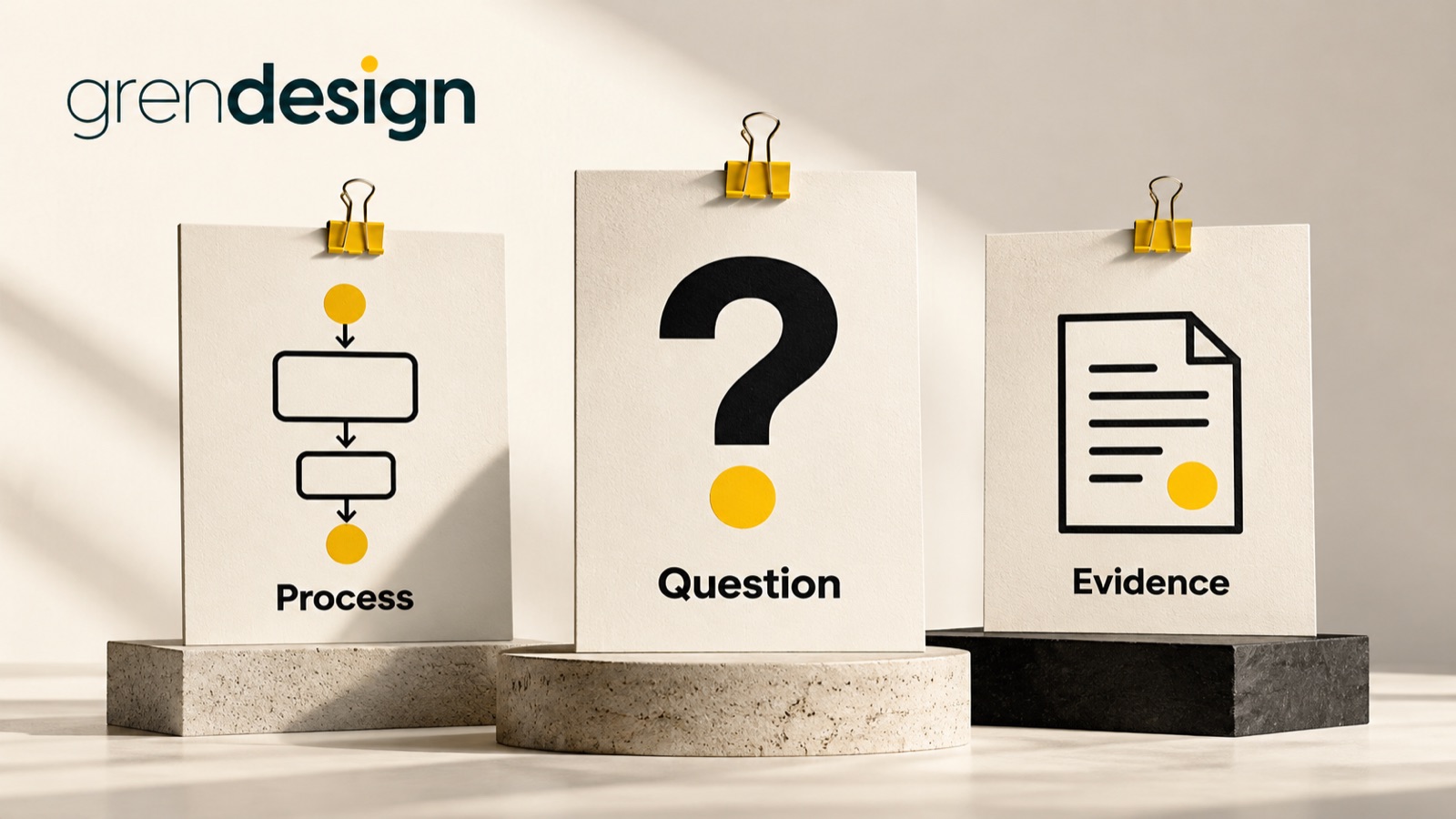
Use a test card for each concept
- Audience: the people the service genuinely suits.
- Question: the buying concern this concept answers.
- Message: one clear point the viewer should remember.
- Evidence: the approved demonstration, explanation or result.
- Next step: what the destination helps them do.
- Decision: what evidence will justify continuing or revising the concept.
This gives a designer useful direction without scripting every creative choice. It also makes the review less subjective. “I prefer the blue one” is a design preference. “The image hides the equipment we need customers to recognise” is a problem the team can solve.
Check the whole response, not only the click
A click is one piece of evidence. Review whether visitors reach the intended page, complete the relevant action and become suitable enquiries. If the campaign aims for awareness, use measures suited to that objective rather than pretending every interaction should produce an immediate sale.
Ask sales to provide concise reasons for unsuitable contacts. If people consistently expect a service you do not offer, inspect the message and destination. If they understand the offer but cannot proceed because of capacity or timing, creative may not be the main constraint.
A high click-through rate with poor enquiry fit can suggest an appealing but ambiguous promise. A lower rate with more relevant conversations can tell a different story. Neither conclusion should be drawn from a handful of interactions without checking the wider evidence.
Do not reset everything when performance changes
Before replacing all creative, look for changes in spend, offer, seasonality, destination pages, tracking and response handling. Record the change dates. A broken form can look like an advertising problem if nobody tests the handover.
If you introduce new concepts, keep a clear version record and avoid unnecessary simultaneous changes. The aim is to learn something about the customer and message, even when account conditions make a perfectly controlled comparison impossible.
There is no universal number of days or conversions that makes every creative decision reliable. Your traffic, objective and buying cycle affect what you can conclude. Make uncertainty visible rather than borrowing a confident rule from an unrelated account.
Build a reusable learning record
After review, write down the customer question, concept, evidence observed and next action. Keep interpretations separate from facts. “This ad produced more form submissions” is different from “customers care more about speed than quality”. The latter may need further evidence.
Over time, the record can inform organic social content, service-page answers and sales material as well as paid campaigns. That is a useful return on creative testing even when a particular concept is retired: the business understands its customers a little better.
