


Write an AI receptionist escalation brief before choosing a voice
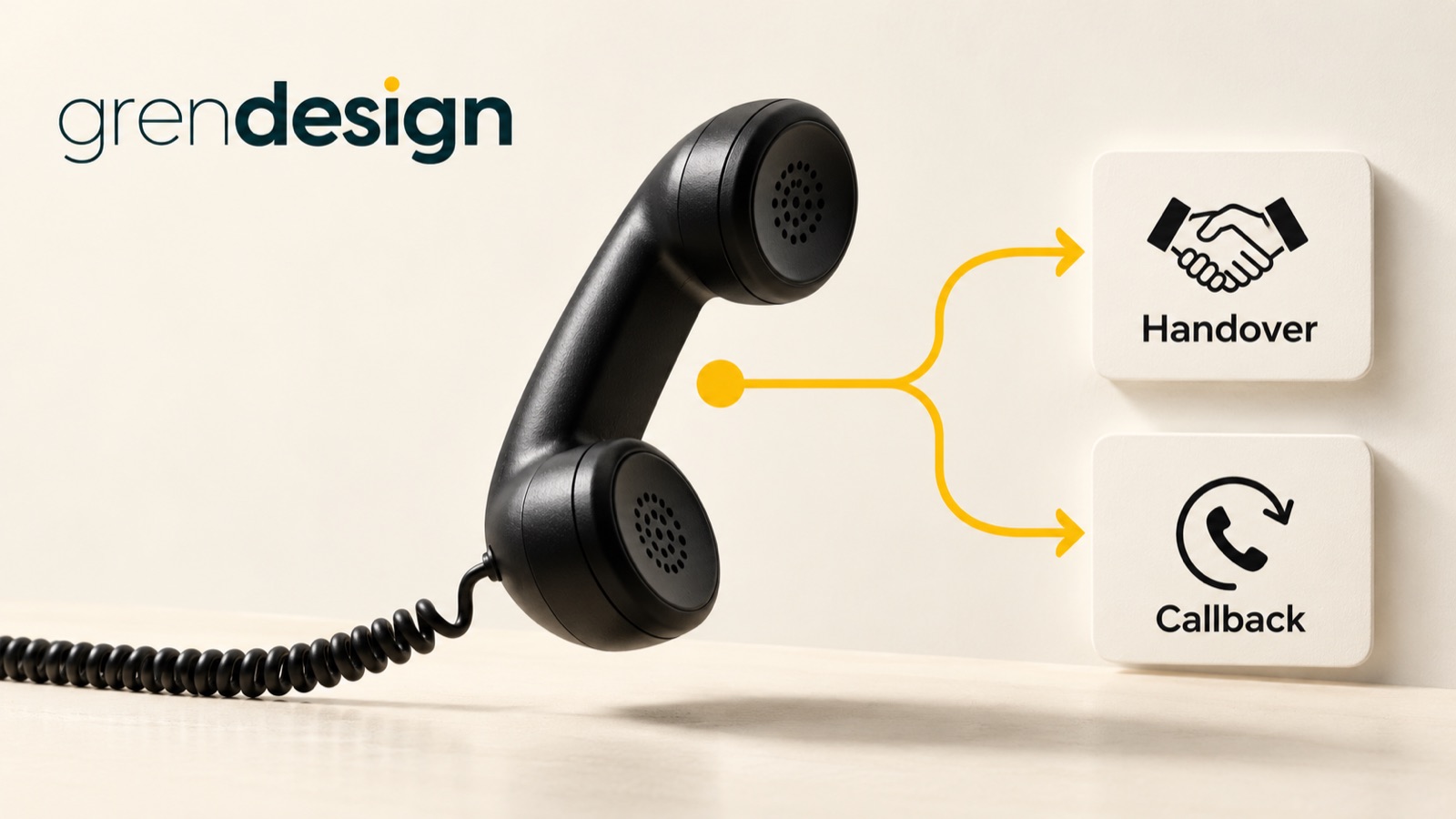
Before choosing an AI receptionist’s voice, decide what happens when it cannot safely finish a call. A useful escalation brief names the trigger, the person responsible, the fallback and the promise the caller can reasonably rely on.
Put the advice into practice
Build a workflow your team can actually rely on
Connect systems and follow-up with agreed rules, human review and exception handling.
Discuss your workflowDescribe the receptionist’s actual job
Start with the calls your business receives, rather than the features a demonstration can show. A receptionist for a consulting firm may need to explain service categories and request a callback. A booking-led business may need to check a live calendar. Those are different responsibilities, with different consequences when something goes wrong.
List what the system can answer from approved information, what it can record and what it can change. Keep those categories separate. Reading an appointment time does not establish permission to cancel it. Collecting a complaint does not authorise a refund.
Choose a narrow initial scope that your team can support. It is easier to expand a dependable process than to repair expectations after callers have been promised actions that the business cannot deliver.
Write the escalation triggers in plain language
A trigger tells the receptionist when to stop its normal script. Avoid vague instructions such as “escalate if necessary”. Describe the caller’s words or the operational condition that should cause a handover.
- The caller asks to speak to a person.
- The system cannot confidently capture a critical detail after a limited number of attempts.
- The caller disputes information or says an earlier promise was not honoured.
- The request falls outside the approved service or transaction scope.
- A booking, lookup or other connected action returns an error or uncertain result.
- The caller describes an urgent situation covered by a separately approved safety process.
Give each trigger a destination and a fallback. “Speak to a person” should not send someone around a loop that returns them to the same assistant. Where immediate transfer is not available, explain the available alternative honestly.
Specialist sectors need specialist review. A general business receptionist should not improvise medical, legal, financial or emergency guidance. Define the scope and appropriate routing with qualified people before offering it to callers.
Specify who receives the call and when
Your brief should identify a role, a maintained destination and the coverage hours. “Transfer to Sarah” becomes fragile when Sarah is on leave or changes roles. “Transfer to the customer support duty contact” works only if somebody maintains that roster.
Record the time zone, public-holiday arrangements and what counts as an answered transfer. Decide how long the caller waits and what they hear while waiting. Confirm whether the receiving person gets a short introduction or whether the caller must explain the issue again.
Write a fallback for no answer, busy lines and a destination that fails. A callback request may be suitable for a routine enquiry. It is not automatically suitable for every urgent or sensitive situation.
For an illustrative design brief, a project enquiry during office hours might go to the sales queue. If nobody accepts, the system offers to record a callback request without promising a particular time. An existing client reporting a delivery problem goes to a different queue with its own coverage rules. The actual priorities must come from your business.
Design the handover note before the conversation
Ask the receiving team what they need to act. A concise handover generally includes the caller’s stated reason, preferred contact method, relevant reference number if appropriate, actions attempted and the unresolved question.
Separate confirmed details from interpretation. “Caller says their booking is for Thursday” is different from “Booking confirmed for Thursday”. If a system lookup failed, that failure belongs in the note. Do not let a polished summary turn uncertainty into an apparent fact.
Use a short read-back for details where mistakes would derail the next step, such as a callback number or appointment date. Let the caller correct the record. Avoid requiring them to recite unnecessary personal information just to reach the right person.
Decide who can access recordings, transcripts and summaries, and how long they are kept. The OAIC’s commercial AI guidance provides context for personal-information handling. Recording and notice requirements need review for the jurisdictions and circumstances involved; this brief is not a legal determination.
Distinguish a finished call from a finished task
A phone system can report that a call ended successfully even when the customer’s request remains unresolved. For example, Twilio’s call resource documentation describes call statuses such as completed, busy and no-answer. Those technical states are not the same as a confirmed booking or an accepted staff handover.
Define a business outcome separately: enquiry captured, transfer accepted, callback awaiting assignment, booking confirmed or action failed. Where a connected action is uncertain, the receptionist should avoid telling the caller it succeeded.
This distinction matters during reporting too. A high answer rate may coexist with a growing callback backlog. Review whether callers reached a useful next step and whether staff completed the follow-up, rather than treating a short call as automatically efficient.
Give staff a way to correct an inaccurate outcome. The system’s first interpretation should not become an unchangeable record that distorts the next conversation.
Rehearse difficult calls before choosing the final voice
Use fictional callers to test background noise, interruptions, an unfamiliar business name, a quiet speaker and a caller who changes their mind. Include someone who wants a person immediately and someone who gives a long explanation before stating the request.
Run the same scenarios when a staff member is available, unavailable and outside business hours. Listen for misleading phrases, repeated questions and accidental promises. Check the actual handover records as well as the audio.
The voice matters, but clarity and pacing should serve the process. A pleasant voice cannot compensate for a transfer to an unmonitored number. Make sure callers understand they are interacting with an automated assistant and have a practical alternative.
Finish the brief with a named owner, a review date, a method to pause the system and the changes that require retesting. Staff roster changes, altered booking rules and new opening hours should all have an update route.
If you are planning the workflow, Grendesign’s AI and automation services are a relevant starting point. Bring a few common call types and one difficult handover. They will reveal more about the requirements than a preferred voice sample alone.
