


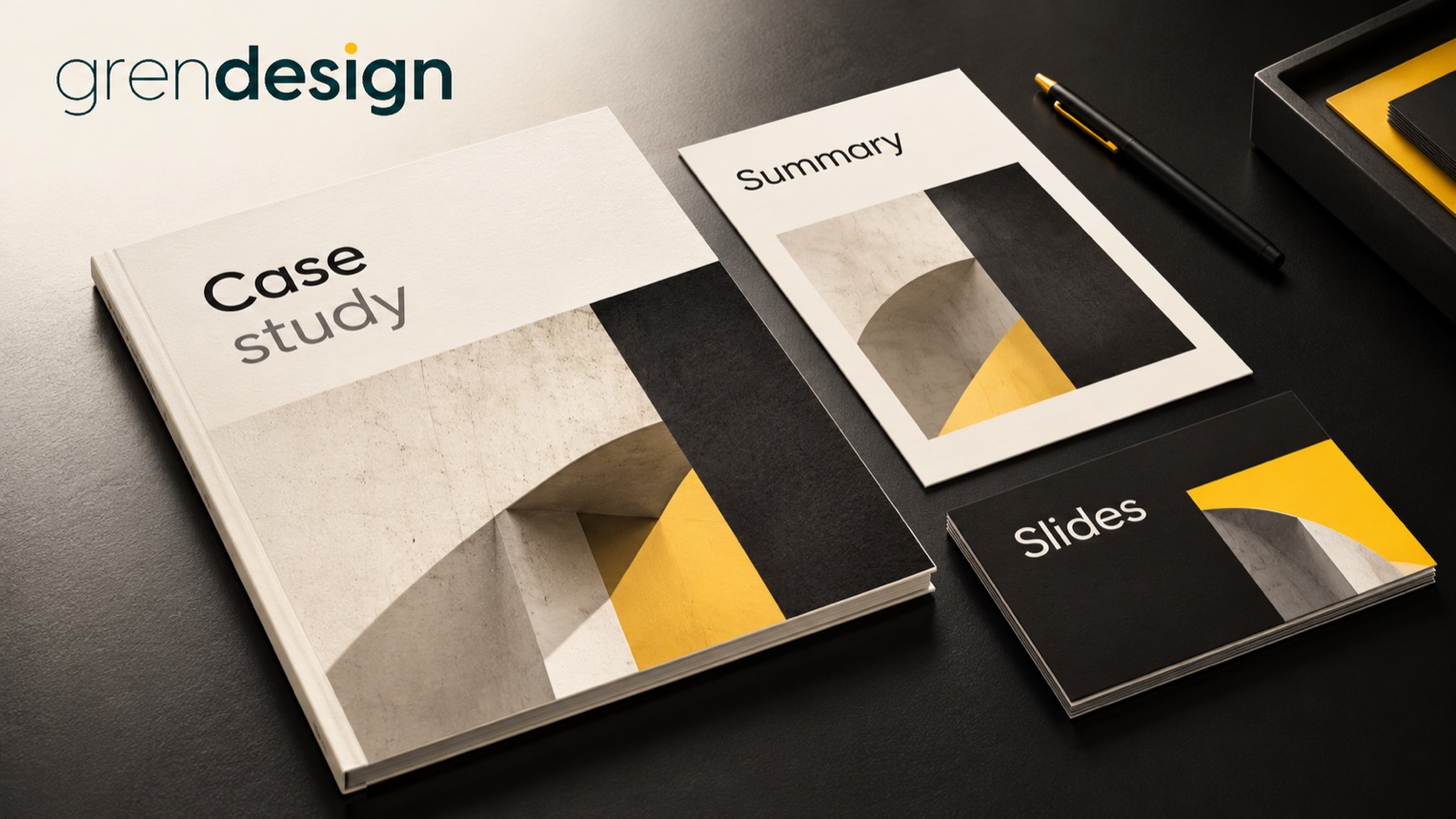
Turn one approved case study into a useful B2B sales kit
One approved case study can support several useful sales materials, provided each version preserves the evidence and helps a buyer answer a specific question. Start with the decision the material will support, rather than a target number of content pieces.
Put the advice into practice
Turn scattered marketing into a considered plan
Connect strategy, creative, channels and ongoing review around your sales process.
Explore our marketing services
Discuss an ongoing marketing partnershipA procurement manager may need a concise account of the work and its scope. A technical stakeholder may want to understand the constraints. An internal champion may need a slide they can explain without you in the room.
The same underlying story can help all three. Copying the full case study into three different layouts usually will not.
Check what has actually been approved
Begin with the final case study and its approval record. Confirm the client name, logo, quotes, images, metrics and description of the work. Note any limits on audience, channels, timing or reuse.
Approval of a webpage does not necessarily cover a paid advertisement, an edited testimonial or a new comparison with a competitor. Where the permission is unclear, ask before expanding the use.
Keep a small evidence register beside the source. It should identify where each result came from, who checked it, the measurement period and any important limitations. For example, an enquiry figure may count form submissions rather than qualified sales opportunities.
The ACCC’s guidance on misleading claims says business claims must be accurate, truthful and supported by reasonable grounds. That includes testimonials and other marketing communications. A shorter format does not justify dropping context that materially changes a claim.
If a case study only supports a qualitative result, keep it qualitative. Do not add percentages because a slide seems to need a large number.
Create a shared evidence outline
Before designing anything, extract the facts that must stay consistent:
- The customer situation and relevant constraints.
- The problem the work was intended to address.
- The actual scope delivered.
- The sequence or approach that matters to the result.
- The observed outcome and how it was measured.
- The limitations and what the example does not establish.
This outline is the reference for every adaptation. It prevents an account manager’s slide, a downloadable PDF and a website excerpt from gradually telling different stories.
Distinguish contribution from causation. If a website project ran alongside changes to pricing and sales operations, the material should not quietly assign all commercial improvement to the website.
Also separate client outcomes from service promises. A result achieved in one setting is evidence about that engagement, not a guarantee that the next buyer will obtain the same result.
Choose the smallest kit that helps the sales conversation
A one-page decision summary
Use this when the buyer needs a quick account of relevance. Include the situation, selected work, outcome and a link to the full story. Keep enough context for someone who did not attend the sales meeting.
The page should be easy to forward. Include the company name, document title and date or version so a loose attachment still makes sense.
A short presentation section
Use a few slides to explain the reasoning behind the work. One can show the problem, another the approach and another the evidence. The number should follow the story rather than a fixed template.
Keep caveats readable on the same slide as the result they qualify. A footnote that becomes illegible in a shared-screen call is not doing its job.
An answer to a common buying question
Turn a relevant section into a concise answer for sales conversations. For example: “How did the project work around an existing CRM?” The answer should describe the specific case and its boundaries, not imply every integration will be equally straightforward.
A useful follow-up link
Give the team a short explanation of when to send the case study. The email should connect the buyer’s question with the evidence rather than announce another piece of company news.
You may only need two of these formats. Prioritise the gaps that your sales team actually encounters.
Adapt the emphasis without changing the facts
Consider this illustrative scenario. A manufacturer approved a case study about reorganising its technical product information so distributors could find the appropriate specification documents.
For an operations stakeholder, the summary might emphasise who maintained the information and how document ownership was assigned. For a marketing stakeholder, it might show the product-page structure and the clearer route to the technical files.
Both versions can be useful without claiming that sales increased. If the approved evidence only establishes that the new structure was delivered and tested, that is the claim available.
For procurement, the useful adaptation might explain what the project included and what remained with the client’s team. This helps the buyer understand responsibilities, rather than relying on a vague claim that the provider handled everything.
The exercise is selection and explanation. It is not a licence to make the case study more impressive each time it gets shorter.
Give the team guidance on when to use each asset
A polished sales kit can still go unused if staff cannot find it or tell when it fits. Store it in a recognised location and add a short usage note.
For each asset, name the audience, the question it helps answer and the next useful step. Also state where it is a poor fit. A case study from a simple project may not be persuasive evidence for a buyer with significantly different constraints.
Ask salespeople to explain the connection in their own words while preserving the facts. “This example addresses the document-management issue you mentioned” is more useful than sending a PDF with “thought you might like this”.
Keep the editable source under controlled ownership. Let the team personalise appropriate parts without altering approved results or client quotations. If a new audience requires a material change, route that version through review.
Check the kit as a set before release
Read every version beside the approved source. Check numbers, dates, client names, quotes and scope. Confirm that links work and the intended recipient can open the materials.
Review exported PDFs and presentation slides at realistic reading sizes. Important evidence should not depend on a decorative image loading or a tiny caption being noticed.
After use, ask the sales team what questions the material answered and what remained unclear. Track whether it was useful in relevant opportunities, but do not treat every download as evidence of a sale.
Set a review owner and date. Results, services and permissions can become outdated. A case study is easier to maintain when you know exactly which assets depend on it.
Make your existing evidence easier to use
Choose one approved case study and one recurring buyer question. Explore Grendesign’s B2B marketing services to discuss the role of sales materials, or graphic design support for a practical document or presentation that preserves the story’s substance.
